Danish Gløgg: A Winegrower’s Recipe for Denmark’s Mulled Wine
What gløgg is, where it comes from, and how we make it at a Danish vineyard: a classic red gløgg, a richer version with port style wine, a white gløgg and one without alcohol.
- Recipe for about 6 glasses
- Ready in about 45 minutes
- With or without alcohol
What is Danish gløgg?
By Jesper Rye Jensen, winegrower and owner of Vesterhave VingaardUpdated 2026
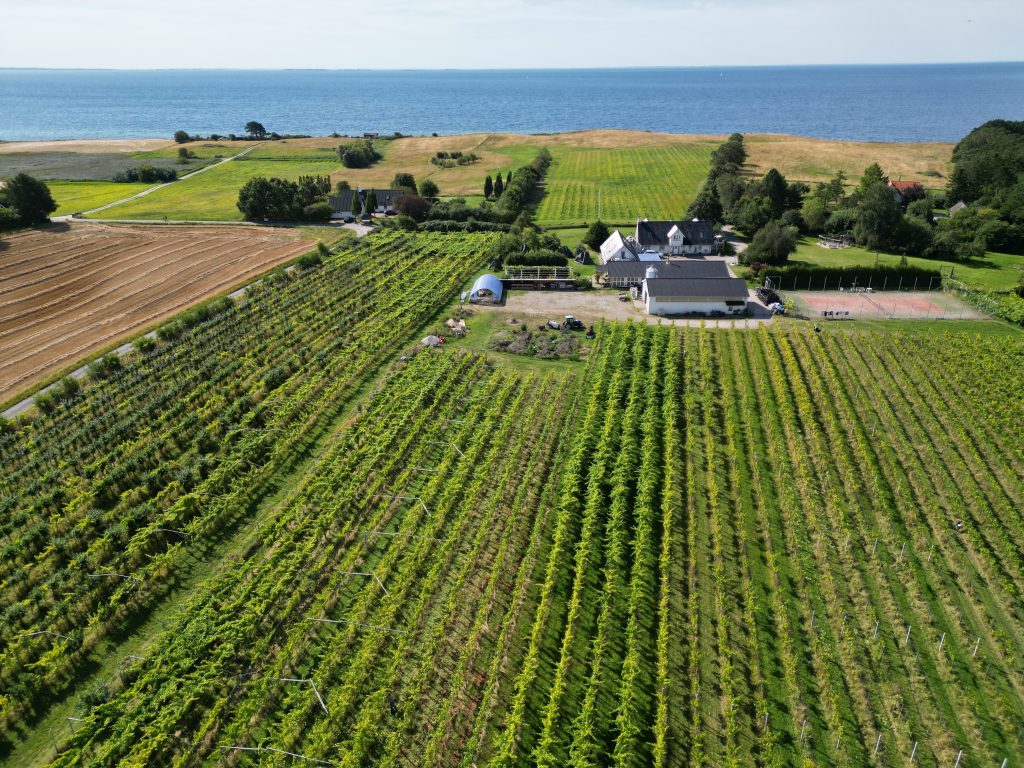
Danish gløgg is hot, spiced red wine with a dash of spirits, sweetened and poured over raisins and chopped almonds. Danes drink it in the weeks before Christmas, often with æbleskiver. At Vesterhave Vingaard in Karrebæksminde, South Zealand, we make our gløgg with red wine and dessert wine from our own vines.
Every December the smell of cloves and cardamom fills Danish kitchens, offices and Christmas markets. For a visitor in Copenhagen, gløgg is often the first taste of a Danish Christmas: a small cup of dark, sweet and warming wine with a spoon for the raisins at the bottom.
I grow wine by Smålandshavet, about an hour south of Copenhagen, so I have strong opinions about what goes into the pot. This guide explains what gløgg is and where the word comes from, gives you our own recipe with measurements, and shows how to make white gløgg and gløgg without alcohol. Our Danish readers can find the same recipe in our gløgg opskrift.
Where does gløgg come from?
Gløgg came to Denmark from Sweden. The Danish encyclopaedia lex.dk explains that the word comes from Swedish glögg, which goes back to glödgad brännvin, spirits heated until they glow.
Warm wine in the North since the 1500s
The name is fairly new, but the habit is old. People in the Nordic countries have drunk warm wine since the 16th century, according to lex.dk (2025). Hot, sweet and spiced wine is known in many cultures, and English cookery mentions mulled wine as early as 1390, according to Wikipedia.
A Christmas drink after the Second World War
Gløgg only became a fixed part of the Danish Christmas after the Second World War, according to lex.dk (2025). At that time Danes looked more to Nordic Christmas traditions than to German ones, and gløgg was taken up after the Swedish model. Since the 2010s, shops and bars have sold more and more luxury versions in the run up to Christmas.
A gløgg championship in Copenhagen
Gløgg is taken seriously in Copenhagen. Since 2014 the food market Torvehallerne has held an unofficial Danish gløgg championship every year, according to lex.dk (2025). The first winning gløgg was based on orange peel, ginger and port. Those three flavours are also the backbone of our own recipe below.
One drink, four spellings
Gløgg is the Danish, Norwegian and Faroese spelling. Swedes and Icelanders write glögg, and in Finland and Estonia it is glögi, according to Wikipedia. In Denmark, Norway, Sweden and Finland it is often drunk at Christmas events.

How do you make Danish gløgg?
You make gløgg by infusing spices in a little warm wine with honey, adding the rest of the wine and heating it gently without boiling. Our recipe makes about 6 glasses of 15 cl and takes about 45 minutes including the infusing time.
Ingredients for about 6 glasses
- 1 bottle of fruity red wine (50 cl), for example Rød Lagune 1
- 1 bottle of port or dessert wine (37.5 cl), for example Hed Lagune
- 2 to 4 cl brandy or aquavit (optional)
- 2 to 3 tablespoons runny honey or cane sugar, to taste
- 1 cinnamon stick
- 6 to 8 whole cloves
- 6 to 8 cardamom pods, lightly crushed
- Peel of 1 unwaxed orange, without the white pith
- 2 cm fresh ginger, sliced (optional)
- 75 g raisins and 50 g chopped almonds to serve
The base follows the classic gløgg described by lex.dk: wine, brandy or cognac, sugar, raisins, almonds, cloves, cardamom and cinnamon. Orange peel and ginger are our addition. If you use Hed Lagune, start with 2 tablespoons of honey, because it has 40 grams of residual sugar per litre.
Soak the raisins
Put the raisins in a bowl with the brandy or a splash of the red wine. The night before is best, otherwise at least an hour. They turn plump and taste of gløgg.
Make the spice base
Put 1 dl of red wine, the honey, cinnamon, cloves, cardamom, orange peel and ginger in a pan. Let it simmer gently for about 10 minutes so the spices release their flavour.
Add the wine
Pour in the rest of the red wine and the dessert wine. Turn the heat down so the gløgg gets hot but never boils. Wikipedia gives 60 to 70 °C as the usual temperature for glögg.
Let it infuse
Leave the gløgg covered on low heat for at least 30 minutes. Taste it and add a little more honey if you want it sweeter.
Strain the spices
Strain off the cinnamon, cloves, cardamom, peel and ginger. If they stay in the pan, the cloves and cardamom take over.
Serve
Put raisins and chopped almonds in glasses or cups and pour the hot gløgg over them. Keep the rest warm on low heat or in a thermos.
The recipe is our own. Adjust honey and spices to your taste.
Which red wine is best for gløgg?
The best red wine for gløgg is fruity, with soft tannins and not too much oak. Fruit is what carries the gløgg together with the spices, so choose a wine you would also enjoy cold.
Rød Lagune 1
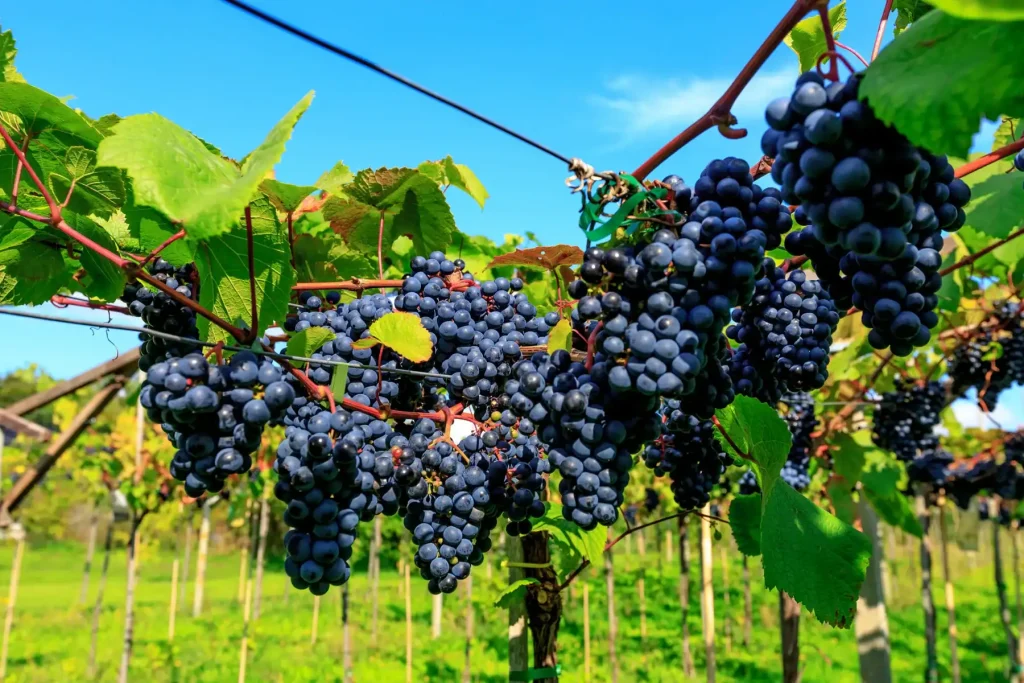
Our choice is Rød Lagune 1, made from Rondo grapes from our field Skovager. The product description calls it dry, full and fruity in the style of Pinot Noir, with notes of blackcurrant, blackberry, pepper and strawberry. It is one of our lightest reds and costs 300 kroner for 50 cl.
Hed Lagune 2019
Hed Lagune is our dessert wine made in the style of a ruby port. The Rondo grapes are dried for 10 days, and the wine is fortified to 20 % with brandy distilled from our own wine. Falstaff gave it 93 points. It costs 300 kroner for 37.5 cl.
Brandy from grape skins
For the classic kick of spirits, use our grape brandy at 40 %. It is distilled from the fermented skins of our red wines, the kind of spirit Italians call grappa. 2 to 4 cl is enough for a whole pot, and many prefer the gløgg without it.
Why we avoid heavy, oaky reds
In my experience, a powerful red with a lot of tannin and oak turns bitter and dry when you heat it with cloves and cardamom. A fruity red keeps the gløgg round and juicy, and the port style wine adds depth and sweetness, so you need less sugar.
Our vines grow by Smålandshavet, where the sea protects them against night frost and gives the grapes a long ripening season. That gives fruity reds with fresh acidity, which is exactly what a good gløgg needs. Read more about our grapes in our guide to Danish wine.
What is the difference between gløgg, glögg and Glühwein?
Gløgg and glögg are the same Nordic drink, and Glühwein is the German mulled wine. In the EU, both vinglögg and Glühwein are defined in Regulation (EU) No 251/2014, and the main legal difference is that water may not be added to Glühwein.
| Rule in EU Regulation 251/2014 | Vinglögg (gløgg, glögg) | Glühwein |
|---|---|---|
| Base | Only red or white wine | Only red or white wine |
| Spices | Mainly cinnamon and or cloves | Mainly cinnamon and or cloves |
| Alcohol | At least 7 % | At least 7 % |
| Made with white wine | Must be stated in the name | Must be stated in the name |
| Added water | Not mentioned in the definition | Not allowed |
Source: Regulation (EU) No 251/2014 on aromatised wine products, Annex II, part B, no. 8 and 9. The rules apply to drinks sold under these names, not to homemade gløgg.
How is gløgg served in the Nordic countries?
Nordic glögg is usually served with raisins and blanched almonds in the glass, and often with ginger biscuits, according to Wikipedia. The snack on the side is where the countries differ.
| Country | What is served with it | Good to know |
|---|---|---|
| Denmark | Æbleskiver with powdered sugar and jam | The classic December pairing in Danish homes and at Christmas markets |
| Norway | Risengrynsgrøt (rice porridge) | Norwegians spell it gløgg, like the Danes |
| Sweden and Finland | Raisins, blanched almonds and ginger biscuits, as across the Nordic countries | Ready made glögg, also low or non alcoholic, is sold at Systembolaget and Alko |
Pairings by country from Wikipedia: Mulled wine. Ginger biscuits are listed there as a general Nordic garnish.
How do you make white gløgg and gløgg without alcohol?
White gløgg is made the same way as red, only with white wine, and gløgg without alcohol is made with apple juice. The spices stay the same. The table shows the four versions we make and what they are built on.
| Gløgg | Base and spices | From our webshop |
|---|---|---|
| Classic red gløgg | Fruity red wine, cinnamon, cloves, cardamom, orange peel, honey | Rød Lagune 1, 300 kr. (50 cl) |
| Gløgg with port | Red wine and port style wine about 4 to 3, less honey | Hed Lagune, 300 kr. (37.5 cl) |
| White gløgg | Fresh white wine, cardamom, orange or lemon peel, ginger, honey, a little apple brandy | Æbledram, 200 kr. (200 ml) |
| Gløgg without alcohol | Apple juice, cinnamon, cloves, cardamom, orange peel, ginger | Apple juice, 150 kr. (3 litres) |
Prices from our webshop, November 2026. The recipes are our own suggestions.
White gløgg
White gløgg is lighter and fresher than red. Use a white wine with fresh acidity, for example a Solaris, and let cardamom, ginger and citrus peel lead rather than cloves. A little apple brandy adds a hint of apple. Under EU rules, a vinglögg sold in shops that is made with white wine must say so in its name. Read more about the grape in our guide to the Solaris grape.
Gløgg without alcohol
For children, drivers and anyone who does not drink alcohol, we make gløgg with apple juice. Heat it with the same spices as the red gløgg and a few slices of ginger. Wikipedia notes that blackcurrant juice is another common base. Apple juice is sweet on its own, so taste it before adding honey.
What do Danes eat with gløgg?
Danes eat æbleskiver with gløgg. Æbleskiver are round, fluffy pancake balls cooked in a special pan with half round hollows, and they are served with powdered sugar and jam, according to Wikipedia. Æbleskiver are eaten in the Christmas season and are often sold at Christmas markets.
The name means apple slices, although modern æbleskiver contain no apple. The word first appears in print in 1866, in the Christmas poems Peters Jul by Johan Krohn, according to Wikipedia. Three on a plate is the traditional serving.
Gløgg at a Danish Christmas party
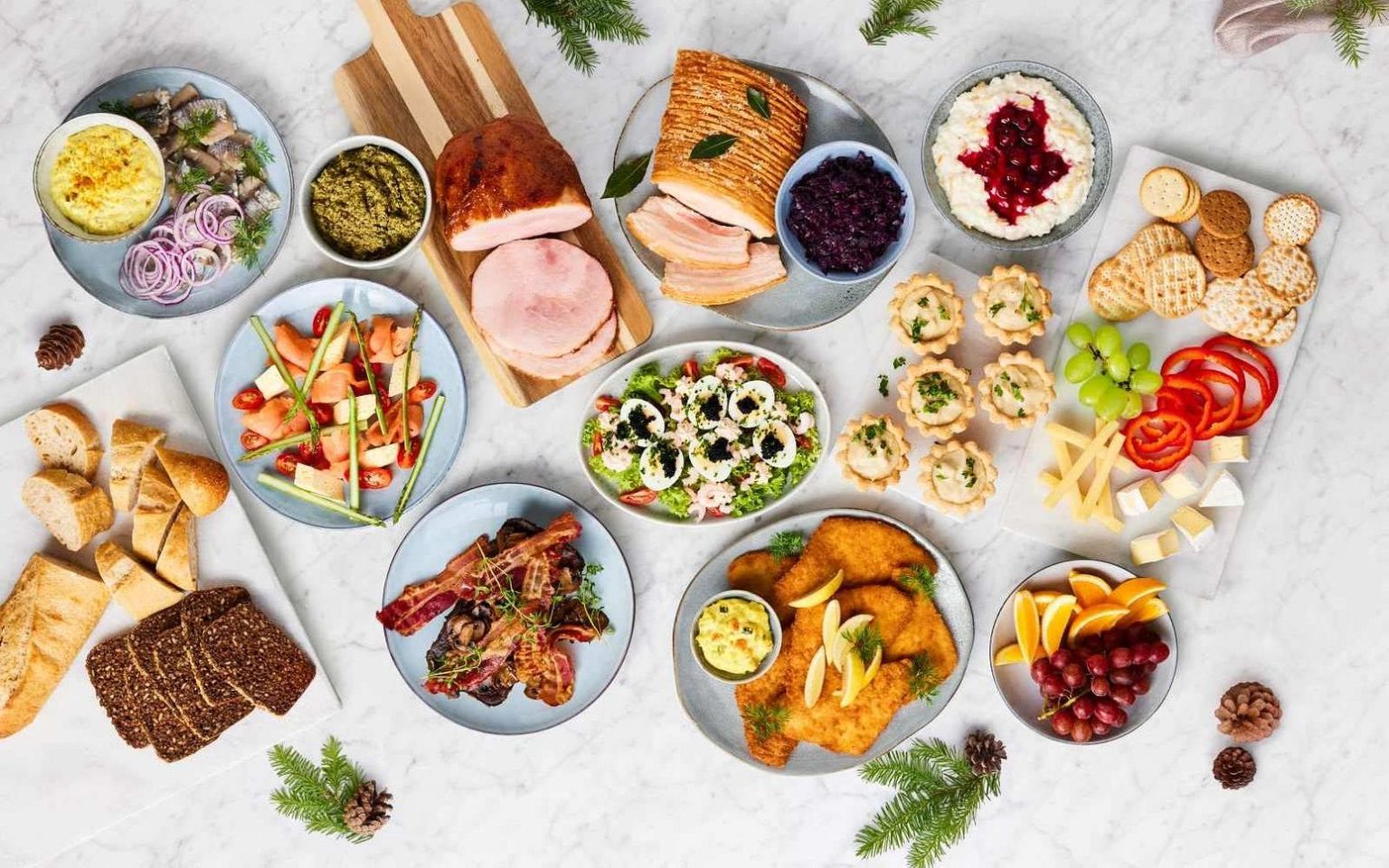
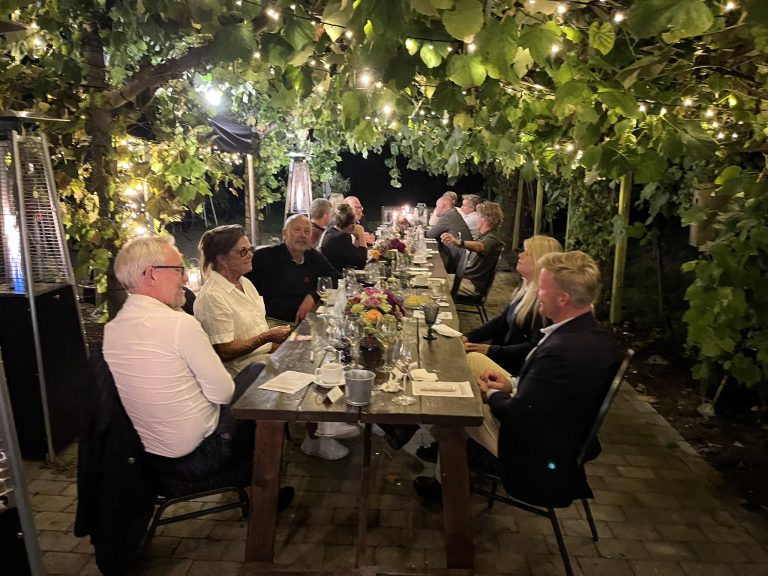
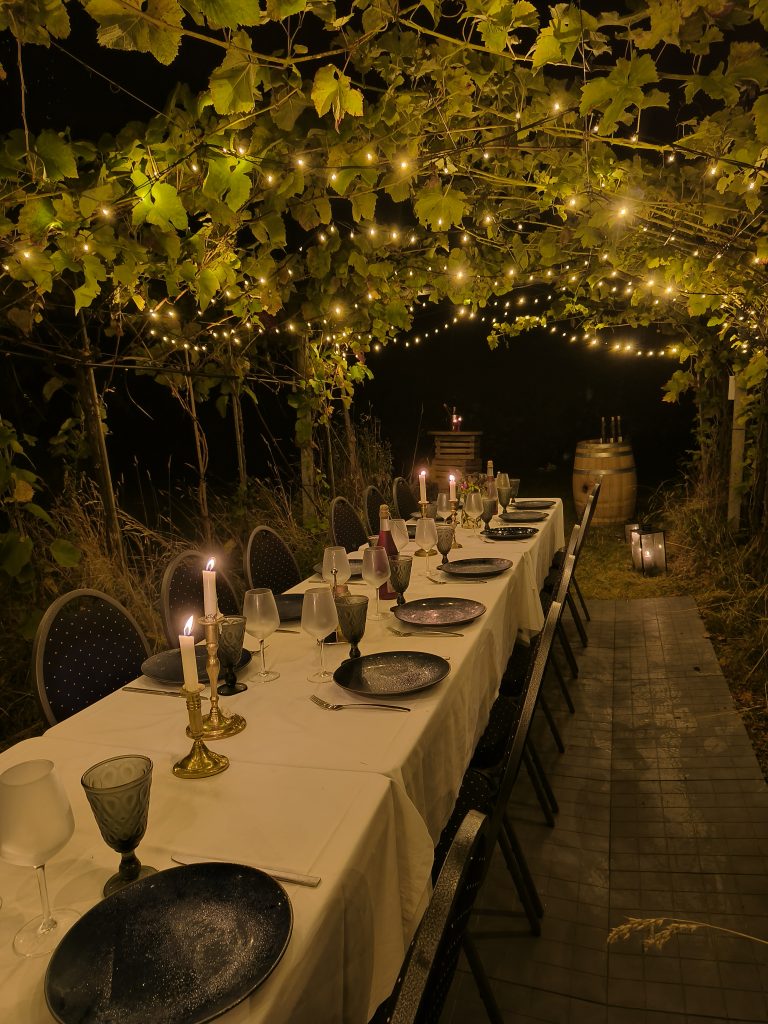
Gløgg also works as a welcome drink at the julefrokost, the Danish Christmas lunch, because it warms guests coming in from the cold. At Vesterhave Vingaard, julefrokost guests are welcomed with a glass of our sparkling wine or a warm, spiced gløgg, before a Christmas buffet with wine from our vines. Read our English guide to the julefrokost and our guide to Danish Christmas food and wine.
Visiting from Copenhagen?
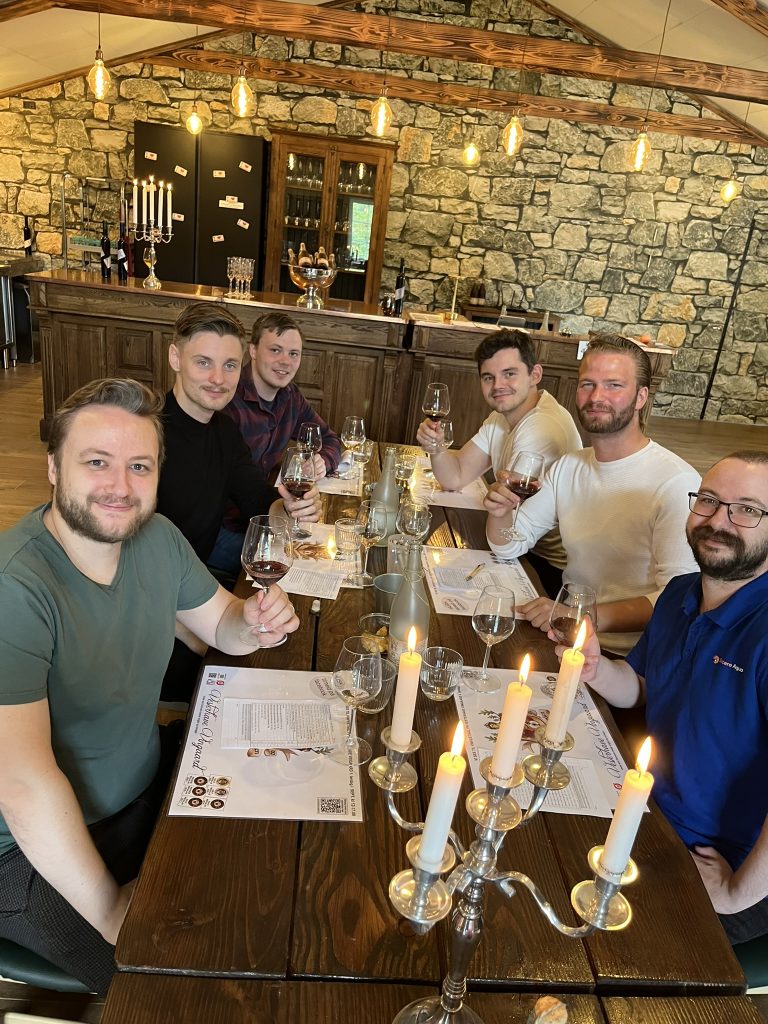
Vesterhave Vingaard is at Vesterhavevej 204, 4736 Karrebæksminde, about one hour by car from Copenhagen. See how to plan a visit on our page about wine tasting near Copenhagen.
Frequently asked questions about Danish gløgg
What is Danish gløgg?
Gløgg is the Danish name for mulled wine: a hot drink of red wine and spirits such as brandy, sweetened and spiced with cloves, cardamom and cinnamon, served with raisins and almonds. According to lex.dk the word comes from Swedish glögg, and gløgg became a fixed Christmas drink in Denmark after the Second World War.
How do you make Danish gløgg?
Warm 1 dl of red wine with honey, cinnamon, cloves, cardamom and orange peel for about 10 minutes. Add the rest of the red wine and a port style wine, heat gently without boiling and leave it to infuse for at least 30 minutes. Strain out the spices and pour the gløgg over raisins and chopped almonds in each glass.
What is the difference between gløgg and glögg?
Gløgg and glögg are the same drink spelled in different languages. Gløgg is the Danish and Norwegian spelling, glögg is Swedish and Icelandic, and glögi is Finnish, according to Wikipedia. Under EU rules, a drink sold as vinglögg must be made only from red or white wine and have at least 7 % alcohol.
Which wine is best for gløgg?
A fruity red wine with soft tannins and little oak works best, because the fruit has to carry the spices. At Vesterhave Vingaard we use Rød Lagune 1, a dry, fruity organic red from Rondo grapes, together with Hed Lagune, our dessert wine made in the style of a ruby port.
Can you make gløgg without alcohol?
Yes. Replace the wine with apple juice or a berry juice such as blackcurrant and heat it with the same spices: cinnamon, cloves, cardamom, orange peel and a little ginger. Apple juice is sweet on its own, so taste it before you add honey. Serve it with raisins and almonds like the classic gløgg.
What do Danes eat with gløgg?
Danes usually eat æbleskiver with gløgg. Æbleskiver are small round pancake balls cooked in a special pan and served with powdered sugar and jam, according to Wikipedia. They are a Christmas season treat, and you find gløgg and æbleskiver together at Christmas markets, at home and at company Christmas parties.
Should gløgg boil?
No, gløgg should never boil. Boiling drives off the alcohol, and in our experience it makes the spices taste bitter. Wikipedia gives 60 to 70 °C as the usual serving temperature for glögg. Keep the pot just below a simmer while the spices infuse, and hold leftover gløgg warm on low heat or in a thermos.
Jesper Rye Jensen
Jesper is the winegrower and owner of Vesterhave Vingaard, Vesterhavevej 204, 4736 Karrebæksminde. He grows organic wine by Smålandshavet in South Zealand, and his Blå Lagune 2019 received 96 points from Falstaff. Read more about us.
Sources
- lex.dk: Gløgg (in Danish, Caroline Nyvang, updated 25 November 2025)
- Wikipedia: Mulled wine
- Wikipedia: Æbleskiver
- EUR-Lex: Regulation (EU) No 251/2014 on aromatised wine products, Annex II part B
- Vesterhave Vingaard: Rød Lagune 1 (Rondo, tasting notes and price)
- Vesterhave Vingaard: Hed Lagune 2019 with Falstaff rating (93 points)
- Vesterhave Vingaard: Gløgg opskrift (in Danish)
Make this year’s gløgg with wine from Smålandshavet
Rød Lagune 1 and Hed Lagune are all you need for our recipe. Both are organic and made by winegrower Jesper Rye Jensen at Vesterhave Vingaard. Order in our webshop, or ask us about the wines in English.
Questions? Write or call us in English.
[email protected]+45 40 55 77 04Vesterhavevej 204, 4736 Karrebæksminde, Denmark